History of Ethnic Education Hawaiʻi
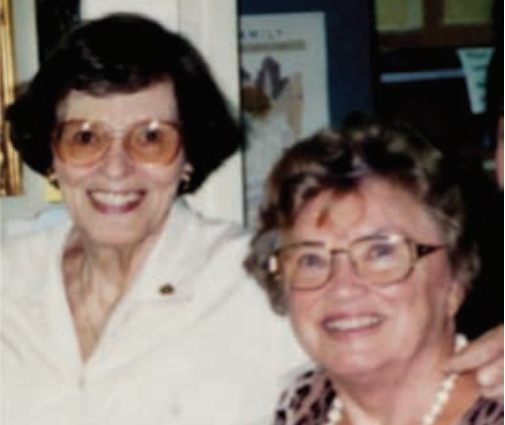
Shelby Henderson & Leona Jona
Co-Founders of Ethnic Education Hawaiʻi
In July 1993, Shelby Henderson, a former Peace Corps volunteer, and Leona Jona, a refugee who came to the United States following the 1956 Hungarian Revolution, founded the Ethnic Education Foundation of Hawaiʻi (now known as Ethnic Education Hawaiʻi, or EEH). Both were working at KNDI Radio when they recognized that a significant portion of Hawaiʻi's population—including many of their listeners—faced barriers because of limited English proficiency.
As a result, many residents were unable to fully access or benefit from English-language media. They often missed critical news, emergency and disaster warnings, and essential information about social services. According to the latest data, approximately 11% of Hawaiʻi's residents are considered Limited English Proficient (LEP), a population composed largely of immigrants, refugees, and their families.
The vision for multilingual broadcasting at KNDI Radio began much earlier with the station's founder, James T. Ownby. After establishing KNDI in 1960, he introduced foreign-language programming by 1963, including broadcasts in Okinawan, Korean, and Portuguese. Recognizing Hawaiʻi's rich cultural diversity, Mr. Ownby believed there was a need for even more multilingual programming. However, as other ethnic communities established their own radio stations, he chose not to duplicate their efforts, instead supporting the growth of media that served each community's unique needs.
Mr. Ownby was known for his compassion and dedication to helping others. Beyond broadcasting, he founded the nonprofit organization Good Bears of the World, which provides teddy bears to organizations serving abused, neglected, and seriously ill children. Although Mr. Ownby passed away in 1986, both KNDI Radio and Good Bears of the World continue to carry forward his legacy of community service.
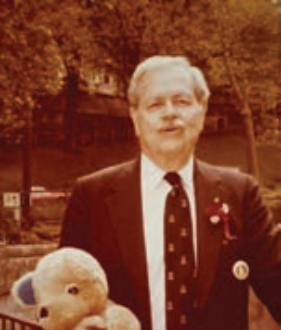
Mr. James T. Ownby
Leona Jona joined KNDI Radio in 1976 and purchased the station in 1988 following Mr. Ownby's passing. Together with her colleague Shelby Henderson, she expanded the station's multicultural programming to better serve Hawaiʻi's growing immigrant and refugee communities. Recognizing that sustainable funding was needed to support educational programming for LEP populations, they established the Ethnic Education Foundation of Hawaiʻi. At the time, KNDI was already broadcasting programs in Filipino and Okinawan. Over the years, additional programming was introduced in Samoan, Tongan, Spanish, Chinese, Vietnamese, Lao, Marshallese, Chuukese, and Pohnpeian. As a nonprofit organization dedicated to serving Hawaiʻi's LEP communities, EEH also partnered with other ethnic media outlets, including KZOO Radio (Japanese), KREA Radio (Korean), and later KBFD Television, to expand the reach of multilingual public service announcements and educational programming.
EEH's first grant was awarded by the Hawaiʻi Justice Foundation and supported a series of 30-minute educational radio programs that explained U.S. laws, as well as the rights and responsibilities of residents. The success of these programs led to continued funding from the Hawaiʻi Justice Foundation and additional support from organizations including Lions Clubs, the Chamber of Commerce Community Health Funds, the Women's Fund of Hawaiʻi, and many others. Following the devastating 2006 Hawaiʻi earthquake, the importance of multilingual emergency communication became increasingly evident. Since 2007, the Hawaiʻi State Civil Defense Agency has contracted with EEH to develop and broadcast multilingual emergency preparedness and public safety messages before, during, and after emergencies. These broadcasts provide critical information on tsunamis, hurricanes, earthquakes, severe weather, and other natural hazards affecting Hawaiʻi's residents.
As awareness of language access needs continued to grow, Hawaiʻi enacted the Language Access Law in 2006, followed by the establishment of the Hawaiʻi Immigrant Justice Center in 2012. EEH had been addressing these communication barriers for years, helping demonstrate the vital importance of providing timely, accurate information in the languages spoken throughout Hawaiʻi's diverse communities. EEH's pioneering work has been recognized with numerous honors. In 2006, the organization received the Keeper of the Flame Award from Nā Loio Immigrant Rights & Public Interest Legal Center in recognition of its outstanding service to immigrant communities. In 2013, EEH was honored by the Hawaiʻi Justice Foundation with the Spirit of Justice Award for its continued commitment to expanding access to justice and vital public information through multilingual education and outreach.
Today, Ethnic Education Hawaiʻi continues its mission of ensuring that all residents—regardless of the language they speak—have equitable access to life-saving information, public services, educational resources, and civic engagement.